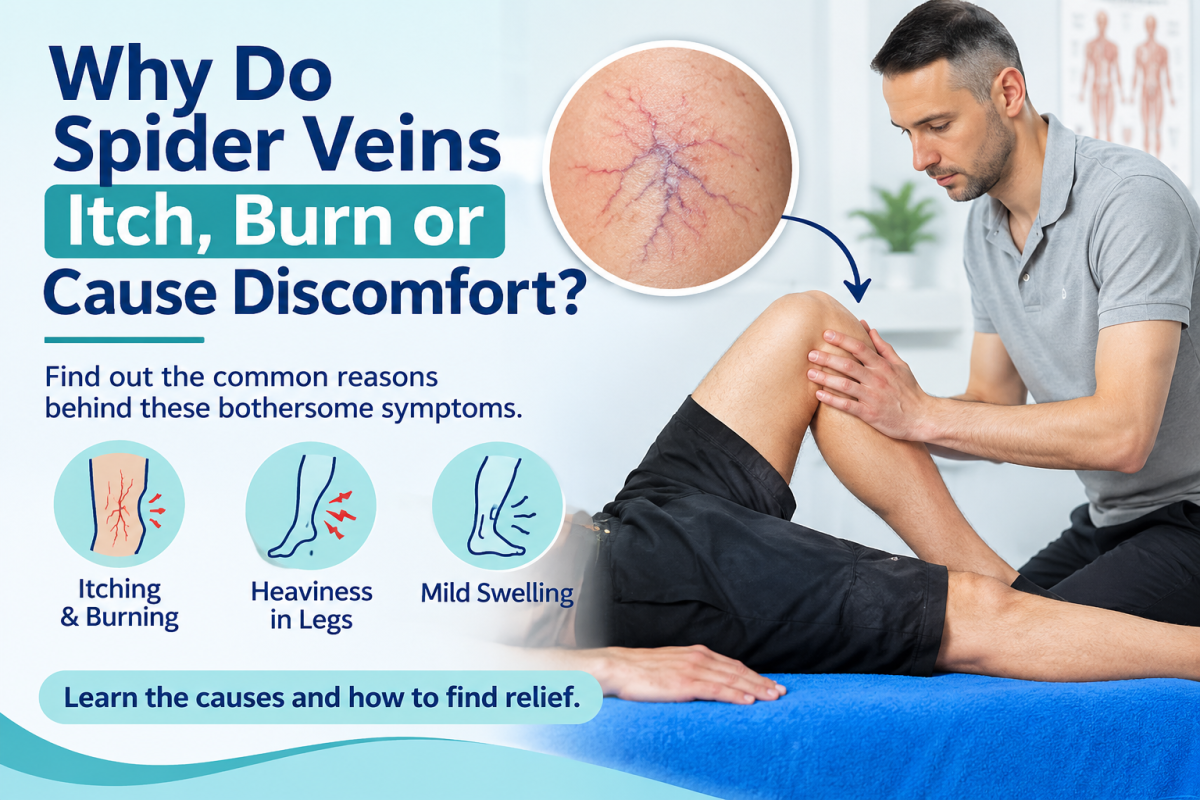
Why Do Spider Veins Itch, Burn or Cause Discomfort?
Spider veins are small, thread-like red, blue or purple veins that show up just beneath the skin, most often on the legs and face. Many people see them as a cosmetic concern. But if yours itch, burn or ache, you may wonder whether something more is going on.
Spider veins are generally harmless and often painless. However, itching, burning or discomfort around the affected areas may sometimes be associated with underlying venous problems or skin irritation. Understanding why can help you decide when home care is enough and when to look at spider veins treatment in India with a qualified vein specialist.
What Are Spider Veins?
Spider veins (telangiectasias) are tiny, dilated blood vessels near the skin’s surface. They can look like a web, a tree branch or fine parallel lines. They commonly appear on the thighs, calves and ankles, and sometimes around the nose and cheeks.
Risk factors include family history, pregnancy, hormonal changes, ageing, long hours of standing or sitting, excess body weight and sun exposure.
Although spider veins are usually harmless, persistent symptoms should not be ignored.
Why Do Spider Veins Itch, Burn or Cause Discomfort?
1. Increased Pressure in the Veins
When blood does not flow smoothly and efficiently back toward the heart, pressure builds up in the leg veins. This can cause a feeling of heaviness, aching, throbbing or burning, especially at the end of the day.
2. Underlying Venous Insufficiency
Sometimes spider veins are the visible sign of weak or faulty valves in deeper veins. Blood pools in the legs, which can lead to itching, swelling, cramps and restlessness. In such cases, treating only the surface veins may not be enough. However, not everyone with spider veins has venous insufficiency or faulty deeper vein valves.
3. Skin Irritation
Sometimes, itching around visible veins is related to the surrounding skin rather than the veins themselves. Dryness, sensitivity and inflammation can cause irritation. This may cause itching, and scratching can make it worse, sometimes leading to redness or darkened patches.
4. Hormonal Changes
Hormonal fluctuations during pregnancy, menstrual cycles and menopause may influence vein walls and circulation. Pregnancy, in particular, can increase pressure on the veins and contribute to the development of visible veins.
5. Heat, Prolonged Standing and Sitting
Hot weather, hot baths and extended periods of standing or sitting without movement may aggravate leg discomfort, particularly in people with underlying venous problems. This is common among teachers, nurses, shopkeepers, drivers and desk workers.
Simple Ways to Ease Discomfort at Home
- Walk regularly and avoid staying in one position for long
- Elevate your legs above heart level for 15 to 20 minutes
- Wear graduated compression stockings if advised by your doctor
- Moisturise dry skin and avoid scratching
- Maintain a healthy weight
- Avoid very hot baths, if they aggravate your symptoms
These measures may help relieve symptoms, but they do not remove existing spider veins or correct underlying faulty vein valves.
Spider Veins Treatment in India: What Are the Options?
Treatment depends on your symptoms, the size of the veins and whether there is underlying venous disease. A Doppler ultrasound may be recommended when symptoms or clinical findings suggest underlying venous disease. It is not routinely necessary for uncomplicated, asymptomatic spider veins. After examination, a specialist may suggest:
- Sclerotherapy: A specialised solution is injected into the affected vein, causing its walls to close. The treated vein gradually fades as the body absorbs it.
- CLaCS (Cryo-Laser and Cryo-Sclerotherapy): CLaCS is an advanced treatment approach used for selected spider veins and reticular veins. It combines transdermal laser treatment with sclerotherapy, along with skin cooling (cryotherapy), to target visible veins. Its suitability depends on vein size, location and individual assessment by a vein specialist.
- Compression therapy: Helps reduce heaviness and swelling. However, compression therapy does not remove existing spider veins.
- Treatment of Underlying Venous Disease: If investigations identify significant venous reflux or other underlying vein problems, the specialist may recommend treating the underlying condition. The treatment approach depends on the specific veins involved and the severity of the disease.
Treatment results vary between individuals. Your specialist can explain the expected benefits, possible risks and whether additional sessions may be necessary.
When Should You See a Doctor?
Consult a vein specialist if you notice:
- Persistent itching, burning or pain
- Leg swelling or heaviness that keeps returning
- Skin darkening, hardening or eczema-like changes near the veins
- Bleeding from visible veins
- Non-healing sores or ulcers on the legs
- Symptoms that interfere with sleep or daily activities
Seek urgent care if one leg suddenly becomes swollen, red, warm and painful. These symptoms may indicate a blood clot. Chest pain or sudden breathlessness requires emergency medical attention, as these can be signs of a pulmonary embolism.
Case Study: Meena’s Story
Meena, a 46-year-old school teacher from Dombivli, spent six to seven hours a day on her feet. For nearly two years she noticed fine purple veins on her calves. Over time, her legs began to burn and itch by evening, and she felt a constant heaviness.
She tried creams and home remedies with little relief. When the discomfort began affecting her sleep, she consulted a vein specialist. A Doppler study showed mild valve weakness in one leg, in addition to the visible spider veins.
Her plan combined compression stockings, lifestyle changes (short walking breaks and leg elevation) and sclerotherapy sessions. During follow-up, she reported improvement in her leg discomfort, while the treated veins gradually became less visible. Her main takeaway: “I wish I had not ignored it as just a cosmetic issue.”
This is an illustrative patient scenario and does not represent a verified patient testimonial.
Conclusion
Spider veins are usually harmless, but itching, burning or aching around the affected areas should not always be ignored.
These symptoms may be associated with underlying venous insufficiency, increased venous pressure, skin irritation, hormonal changes or lifestyle factors.
Home-care measures can help manage discomfort, but persistent or worsening symptoms deserve proper medical evaluation. A timely assessment can help identify underlying vein problems and determine the most appropriate spider veins treatment in India for your condition.
Medical disclaimer: This article is for general educational purposes and does not replace individual medical consultation, diagnosis or treatment.
Contact Information
Samata Hospital
2nd Floor, Swara Emerald, Dr R.P. Rd, Tilak Nagar, Dombivli East, Dombivli, Maharashtra 421201
Phone: +91 9403890477
Schedule Your Consultation Today – Take the first step towards healthier legs and informed treatment decisions.
Frequently Asked Questions
Mild itching around visible veins may occur due to dry skin or irritation. However, persistent itching, especially when accompanied by swelling, skin discolouration or inflammation, should be evaluated by a healthcare professional.
Spider veins are generally painless. However, burning or aching sensations around the affected area may sometimes be associated with underlying venous insufficiency or other circulation-related problems.
Spider veins are usually harmless. However, they can sometimes accompany underlying venous insufficiency, which is why symptomatic veins should be examined.
There is no single best option. Sclerotherapy and laser treatment are commonly used, and the right choice depends on vein size, location and whether deeper veins are involved.
Successfully treated veins generally close or fade and do not simply reopen. However, new spider veins may develop over time, particularly in people with genetic or hormonal risk factors.
