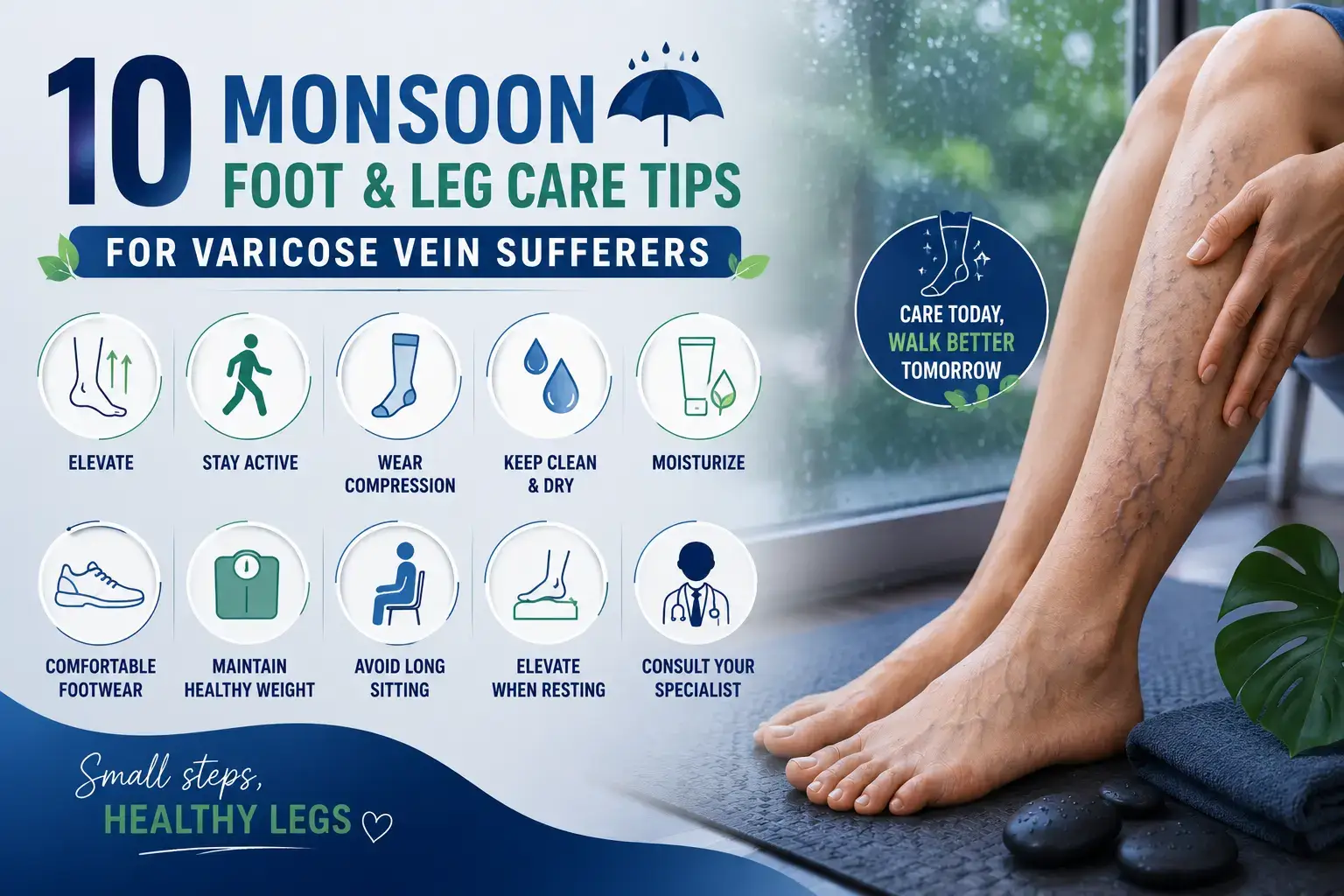
10 Monsoon Foot and Leg Care Tips for Varicose Vein Sufferers
The monsoon season brings welcome relief from the summer heat, but it can also create unique challenges for people living with varicose veins. Increased humidity, prolonged standing, damp footwear, and reduced physical activity can contribute to leg discomfort, swelling, and poor circulation. Following the right monsoon foot and leg care tips for varicose veins can help minimise these symptoms, improve circulation and keep your legs healthy throughout the rainy season..
If you already experience aching legs, heaviness, or swollen veins, taking simple preventive measures during the rainy season can help reduce symptoms and support better vein health.
At Surekha Varicose Veins Clinic, Dr. Ashish Dhadas provides comprehensive care for varicose veins through advanced diagnostic techniques, personalized treatment plans, and practical lifestyle guidance to support healthy circulation and long-term vein health all year round.
Why Does the Monsoon Affect Varicose Veins?
Although the rainy season does not directly cause varicose veins, environmental changes during the monsoon can worsen existing symptoms. High humidity may make your legs feel heavier, while wet conditions increase the risk of fungal infections, especially if your feet remain damp for long periods. In addition, many people become less active during the rainy season, reducing the natural pumping action of the calf muscles that supports healthy blood flow.
Understanding these seasonal changes can help you take better care of your legs and prevent unnecessary discomfort.
1. Keep Your Feet Clean and Dry
During the monsoon, wet shoes and socks can trap moisture, creating an ideal environment for fungal and bacterial infections. Wash your feet daily with mild soap, dry them thoroughly especially between the toes and change damp socks promptly. Maintaining good foot hygiene is one of the most effective ways to protect your skin and veins during the rainy season.
2. Wear Comfortable, Waterproof Footwear
Choose footwear that provides good support while protecting your feet from rainwater. Waterproof sandals or shoes with proper grip help prevent slips and reduce prolonged exposure to moisture. Avoid tight footwear, as it may restrict circulation and worsen leg discomfort.
3. Keep Moving Throughout the Day
Long periods of sitting or standing can slow blood circulation and increase pressure inside the leg veins. Even during rainy weather, try to stay active by taking short walks, stretching your calves, or performing simple ankle exercises at home. Regular movement improves blood flow and helps reduce swelling.
4. Elevate Your Legs Whenever Possible
Raising your legs above heart level for 15–20 minutes after a busy day allows blood to flow back toward the heart more efficiently. This simple habit can relieve heaviness, reduce swelling, and improve overall comfort, especially if you spend long hours standing.
5. Wear Compression Stockings as Recommended
Compression stockings are one of the most effective non-surgical treatments for varicose veins. They gently support the veins, improve circulation, and help reduce swelling and leg fatigue. Wear them as advised by your vascular specialist, particularly if your job requires prolonged standing or sitting.
6. Stay Hydrated
Many people drink less water during the rainy season because they feel less thirsty. However, proper hydration supports healthy blood circulation and helps reduce water retention. Drinking adequate fluids throughout the day contributes to better vein function and overall health.
7. Eat a Vein-Friendly Diet
A balanced diet rich in fruits, vegetables, whole grains, and fibre supports healthy blood vessels and helps maintain a healthy weight. Foods containing vitamin C, vitamin E, and flavonoids may promote vascular health, while reducing excessive salt intake can help minimise fluid retention and leg swelling.
8. Avoid Sitting or Standing for Too Long
Whether you’re working from home or in the office, change your position regularly. Standing in one place or sitting continuously increases pressure in the leg veins. Taking a short walk or stretching every 30–60 minutes encourages better circulation and reduces discomfort.
9. Check Your Feet Regularly
People with varicose veins should inspect their feet and legs for skin changes, swelling, cuts, redness, or signs of infection. Early detection of small problems can prevent more serious complications, particularly in individuals with diabetes or chronic venous insufficiency.
10. Seek Early Treatment for Persistent Symptoms
If your leg pain, swelling, heaviness, itching, or visible veins continue to worsen despite lifestyle changes, consult a vascular specialist. Modern treatments such as laser therapy, radiofrequency ablation, and minimally invasive procedures can effectively treat varicose veins with minimal downtime.
Early treatment often prevents complications such as skin pigmentation, venous ulcers, or blood clots.
Common Symptoms That Should Not Be Ignored
While mild discomfort is common, certain symptoms may indicate worsening vein disease. Consult a specialist if you experience:
Common Symptoms That Should Not Be Ignored
- Persistent leg swelling
- Pain that interferes with daily activities
- Skin discoloration around the ankles
- Non-healing wounds or ulcers
- Bleeding from varicose veins
- Sudden redness or warmth in the leg
Prompt medical evaluation helps identify the underlying cause and allows treatment before complications develop.
How Can a Vascular Specialist Help?
A vascular specialist can assess the severity of your varicose veins using a clinical examination and Doppler ultrasound. Based on the findings, a personalized treatment plan may include lifestyle modifications, compression therapy, or minimally invasive procedures designed to restore healthy blood flow.
At Surekha Varicose Veins Clinic, Dr. Ashish Dhadas offers advanced, evidence-based treatment for varicose veins and other vascular conditions, helping patients achieve long-term relief and improved quality of life.
Conclusion
Following these monsoon foot and leg care tips for varicose veins can help you stay comfortable and protect your vein health throughout the rainy season. Simple habits such as keeping your feet dry, staying active, wearing compression stockings, maintaining a healthy diet, and seeking early medical advice can make a significant difference in managing symptoms.
If you experience persistent leg pain, swelling, or visible varicose veins, consult Dr. Ashish Dhadas at Surekha Varicose Veins Clinic for a comprehensive evaluation and personalized treatment plan. Early intervention can help prevent complications and keep your legs healthy in every season.