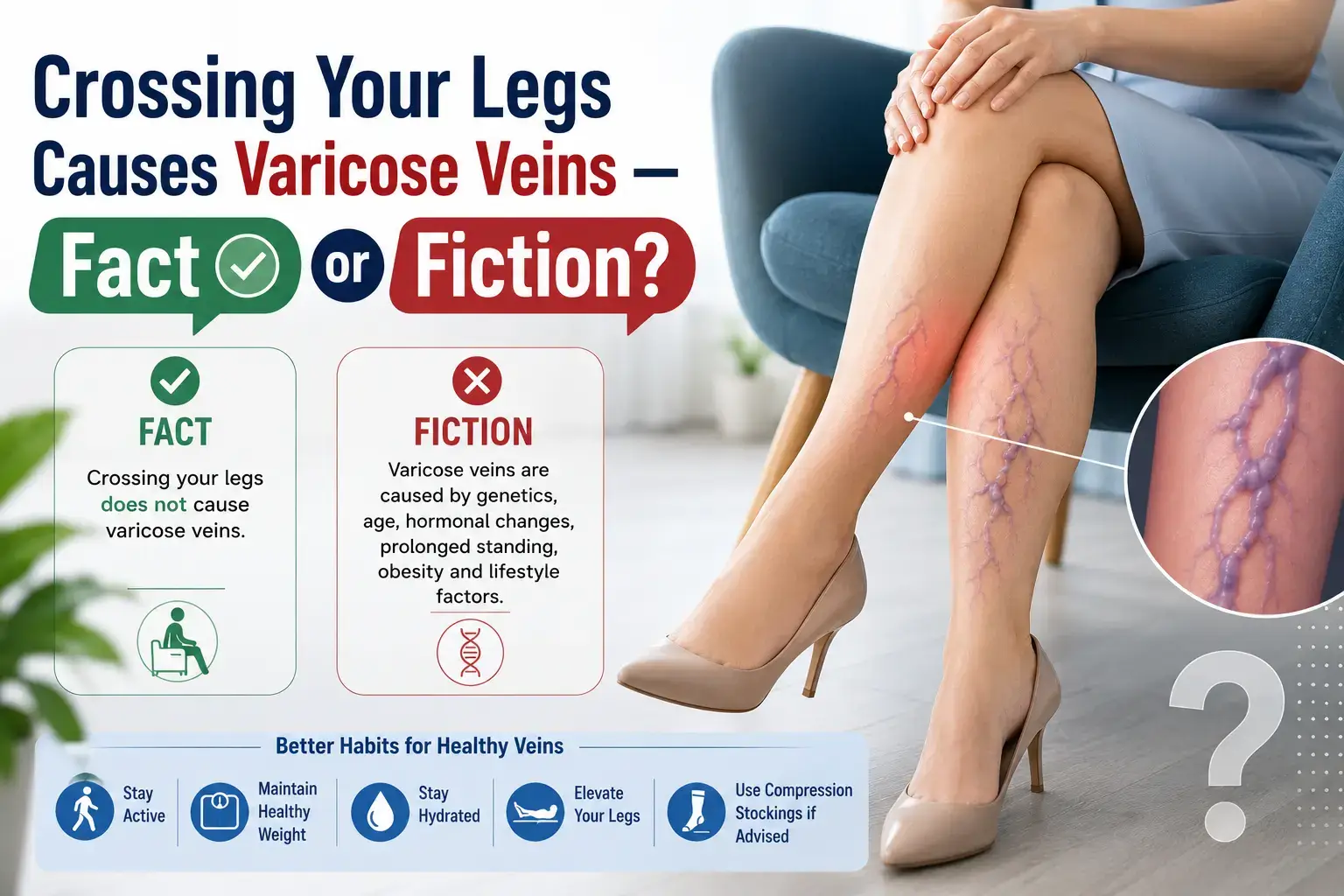
Crossing Your Legs Causes Varicose Veins — Fact or Fiction?
Many people have been told that crossing their legs while sitting can lead to varicose veins. It is one of the most common myths about vein health, and it often causes unnecessary concern. But does crossing your legs cause varicose veins, or is this simply a misconception?
The truth is that crossing your legs does not directly cause varicose veins. However, certain lifestyle habits associated with prolonged sitting can contribute to poor circulation and may worsen symptoms in people who already have vein disease.
Understanding the real causes of varicose veins can help you take the right preventive steps and seek treatment when needed.
At Surekha Varicose Veins Clinic, Dr. Ashish Dhadas, an experienced vascular and endovascular surgeon, provides advanced diagnosis and minimally invasive treatment for varicose veins and other vascular conditions.
What Are Varicose Veins?
Varicose veins are enlarged, twisted, and swollen veins that most commonly appear in the legs. They develop when the valves inside the veins become weak or damaged, allowing blood to flow backward and pool in the veins instead of moving efficiently toward the heart.
Over time, this increased pressure causes the veins to enlarge and become more visible beneath the skin.
Does Crossing Your Legs Cause Varicose Veins?
The simple answer is no.
There is no scientific evidence that crossing your legs directly causes varicose veins. Sitting with your legs crossed for short periods may temporarily increase pressure on the veins, but it does not damage the vein valves or create varicose veins.
The actual problem arises when people remain seated in the same position for several hours without moving. Whether your legs are crossed or uncrossed, prolonged sitting reduces the natural pumping action of the calf muscles, slowing blood circulation and increasing pressure inside the leg veins.
Therefore, crossing your legs is a myth—not a direct cause of varicose veins.
Why Do People Believe This Myth?
The misconception likely developed because people who sit for long hours often notice leg discomfort or visible veins. Since many people naturally cross their legs while sitting, the two became associated.
In reality, the issue is prolonged inactivity, not the position of your legs.
Taking regular movement breaks is far more important than worrying about crossing your legs occasionally.
What Actually Causes Varicose Veins?
Several factors increase the risk of developing varicose veins.
Weak or Damaged Vein Valves
Healthy veins contain one-way valves that keep blood flowing toward the heart. When these valves weaken, blood collects in the veins, causing them to enlarge.
Prolonged Standing or Sitting
Standing or sitting for extended periods increases pressure in the leg veins. Jobs that require long hours of standing or desk work are associated with a higher risk of varicose veins.
Family History
Genetics play a significant role. If your parents or close relatives have varicose veins, your chances of developing them are higher.
Pregnancy
Hormonal changes and increased blood volume during pregnancy place additional pressure on the veins, making varicose veins more common.
Obesity
Excess body weight increases pressure on the veins in the legs, making it harder for blood to return to the heart efficiently.
Aging
As people age, vein walls and valves naturally become weaker, increasing the likelihood of developing varicose veins.
Avoid:
- White rice
- White bread
- Pasta made from white flour
- Processed snacks like crackers and biscuits
Why: These foods slow digestion and promote weight gain, both of which negatively impact vein health.
What Are the Symptoms of Varicose Veins?
Some people are concerned mainly about the appearance of varicose veins, while others experience uncomfortable symptoms that affect daily life.
Common symptoms include:
- Bulging, twisted blue or purple veins
- Aching or throbbing pain in the legs
- A feeling of heaviness, especially after standing
- Swelling around the ankles
- Burning or itching around the affected veins
- Night-time leg cramps
- Fatigue in the legs
If these symptoms become persistent, medical evaluation is recommended.
Can Crossing Your Legs Make Existing Varicose Veins Worse?
Crossing your legs occasionally is unlikely to worsen existing varicose veins. However, remaining seated for several hours without changing position may increase discomfort, swelling, and leg heaviness.
If you work at a desk, try to stand up, stretch, or walk for a few minutes every 30 to 60 minutes. These simple movements help activate the calf muscles and improve blood circulation.
How Can You Prevent Varicose Veins?
While genetics cannot be changed, healthy lifestyle habits can reduce your risk and slow the progression of vein disease.
Maintaining a healthy weight, exercising regularly, avoiding prolonged standing or sitting, elevating your legs after a long day, wearing compression stockings when advised, and eating a balanced diet all contribute to better vein health.
Small daily habits often have a greater impact than the position in which you sit.
When Should You See a Vascular Specialist?
You should consult a vascular specialist if you notice persistent leg pain, swelling, skin discoloration, itching, bleeding from veins, or non-healing ulcers. These symptoms may indicate chronic venous insufficiency and should be evaluated promptly.
Early diagnosis allows treatment before complications develop.
Treatment Options for Varicose Veins
Treatment depends on the severity of the condition. Mild cases may improve with lifestyle changes and compression stockings, while larger or symptomatic varicose veins may require minimally invasive procedures such as laser treatment, radiofrequency ablation, or sclerotherapy.
These advanced treatments are effective, involve minimal discomfort, and usually allow patients to return to normal activities quickly.
At Surekha Varicose Veins Clinic, Dr. Ashish Dhadas offers personalized treatment plans using modern, evidence-based techniques to relieve symptoms and improve circulation.
Conclusion
The belief that crossing your legs causes varicose veins is fiction, not fact. While sitting with crossed legs for a short time does not damage your veins, remaining inactive for prolonged periods can reduce circulation and worsen symptoms in people with existing vein disease.
If you have persistent leg pain, swelling, or visible varicose veins, don’t rely on myths for answers. Consult Dr. Ashish Dhadas at Surekha Varicose Veins Clinic for an accurate diagnosis and advanced treatment options that can help improve your vein health and quality of life.