Can Walking Reduce Varicose Veins?
Varicose veins are enlarged, twisted veins that commonly appear on the legs due to weakened vein valves and improper blood flow. Many people with varicose veins experience symptoms such as leg pain, swelling, heaviness, and discomfort, especially after standing for long periods.
One of the most frequently asked questions by patients is, “Can walking reduce varicose veins?” According to Dr. Ashish Dhadas at Surekha Varicose Veins Clinic, walking is a beneficial low-impact exercise for improving blood circulation and supporting vein health. While walking may not completely remove varicose veins, it can help manage symptoms such as leg heaviness, swelling, and discomfort.
Understanding how walking helps manage varicose vein symptoms and when medical treatment may be necessary can help patients make informed decisions about their vein health and circulation.
What are Varicose Veins?
Varicose veins occur when the valves inside the veins become weak or damaged, causing blood to pool in the veins instead of flowing properly toward the heart.
This leads to enlarged and visible veins, most commonly in the legs and feet.
Common Symptoms of Varicose Veins
Symptoms may vary depending on the severity of the condition.
Common symptoms include:
- Bulging blue or purple veins
- Leg pain or aching
- Swelling in the legs
- Heaviness in the legs
- Burning sensation
- Muscle cramps
- Itching around veins
- Discomfort after prolonged standing
Without treatment, symptoms may gradually worsen over time.
Can Walking Reduce Varicose Veins?
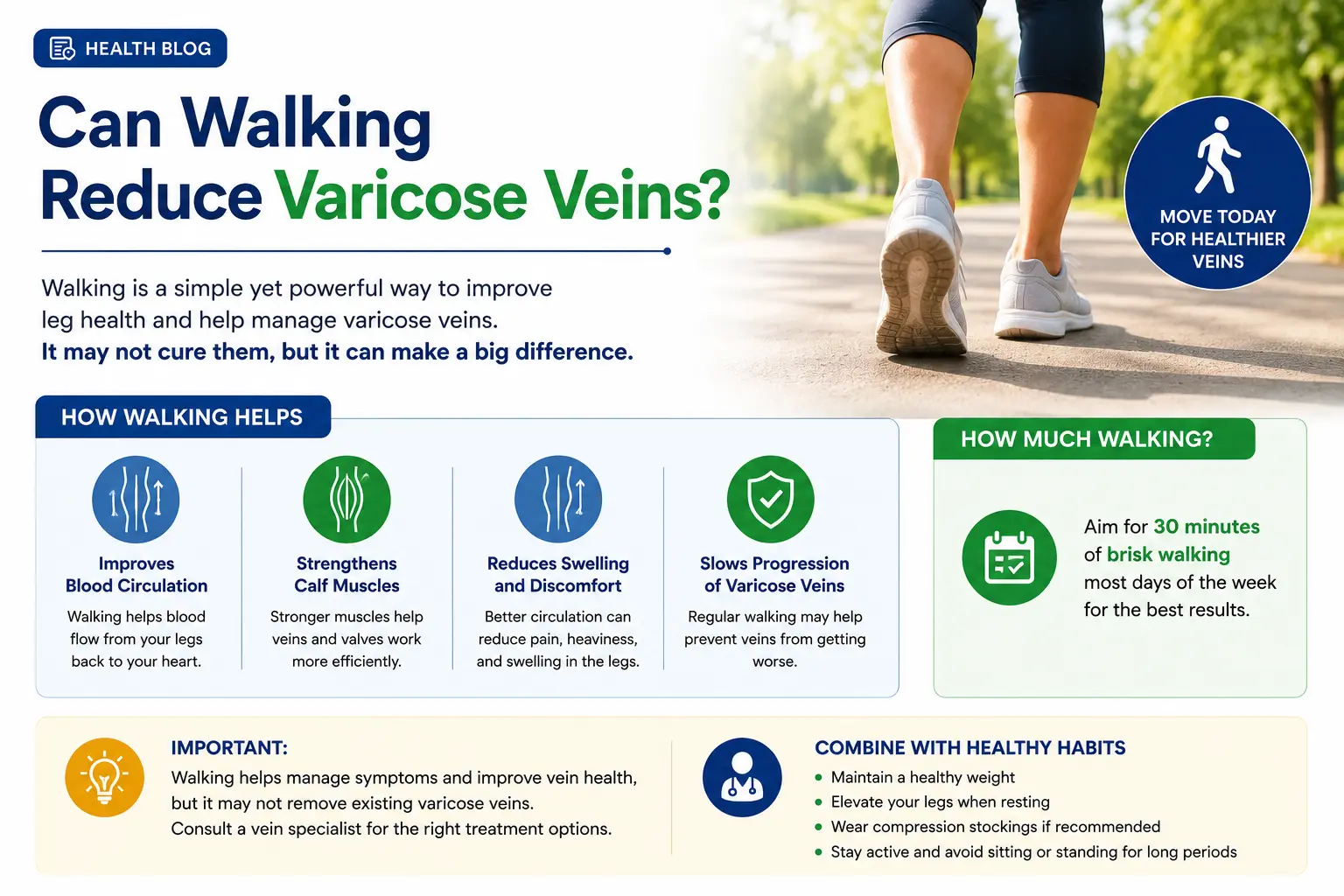
Walking cannot completely eliminate varicose veins, but it is highly beneficial for improving blood circulation and reducing symptoms.
Regular walking helps the calf muscles work more effectively, which supports the veins in pushing blood back toward the heart.
Benefits of Walking for Varicose Veins
1. Improves Blood Circulation
Walking promotes healthy blood flow and reduces blood pooling in the veins.
Better circulation may help reduce swelling and heaviness in the legs.
2. Strengthens Calf Muscles
The calf muscles act as a natural pump for the veins in the legs.
Walking keeps these muscles active and supports healthy vein function.
3. Reduces Leg Swelling
Regular movement helps prevent fluid accumulation in the legs and ankles.
4. Helps Maintain Healthy Weight
Excess body weight increases pressure on leg veins and can worsen varicose veins.
Walking supports weight management and reduces stress on the veins.
5. Reduces Discomfort
People who walk regularly often experience reduced pain, stiffness, and heaviness in the legs.
Walking Tips for Managing Varicose Veins
Walking is safe for most people with varicose veins, but following the right techniques can improve its benefits.
Walk Regularly
Aim for at least 30 minutes of walking daily to improve circulation.
Wear Comfortable Footwear
Supportive shoes help reduce strain on the legs.
Avoid Standing for Long Periods
Long hours of standing can worsen vein pressure.
Take short walking breaks whenever possible.
Elevate the Legs
After walking, elevating the legs can help reduce swelling and improve blood flow.
Stay Hydrated
Proper hydration supports healthy circulation and vein function.
Other Lifestyle Changes for Varicose Veins
Along with walking, certain lifestyle modifications can help manage symptoms.
Maintain Healthy Weight
Reducing excess weight lowers pressure on the veins.
Avoid Tight Clothing
Tight clothes around the waist or legs may restrict blood circulation.
Exercise Regularly
Low-impact activities such as cycling, swimming, and yoga can also support vein health.
Use Compression Stockings
Compression stockings help improve circulation and reduce swelling in the legs.
When Walking Alone is Not Enough
While walking helps improve symptoms, advanced varicose veins may require medical treatment.
Consult a specialist if you experience:
- Severe leg pain
- Persistent swelling
- Skin discoloration
- Non-healing ulcers
- Bleeding from veins
- Increasing size of veins
Early treatment can help prevent complications and improve quality of life.
Treatment Options for Varicose Veins
Modern treatments are safe, minimally invasive, and highly effective.
Dr. Ashish Dhadas specializes in advanced varicose veins treatment and minimally invasive procedures that help patients recover faster with less discomfort.
1. EVLT (Endovenous Laser Treatment)
EVLT is a minimally invasive laser procedure used to close damaged veins and improve blood flow.
Benefits of EVLT
- Minimal pain
- Faster recovery
- No major cuts or stitches
- Short hospital stay
2. Sclerotherapy
A special solution is injected into the affected veins to close them.
3. Surgical Treatment
In severe cases, surgical removal of damaged veins may be recommended.
Conclusion
So, can walking reduce varicose veins? Walking may not completely remove varicose veins, but it is a beneficial low-impact exercise that can help improve circulation, reduce swelling, and manage symptoms naturally.
Combining regular walking with healthy lifestyle habits and timely medical care can help improve vein health and prevent complications. If symptoms become severe or affect daily activities, consulting Dr. Ashish Dhadas at Surekha Varicose Veins Clinic can help patients receive proper diagnosis and advanced varicose veins treatment.
Consult Now
Consult Dr. Ashish Dhadas at Surekha Varicose Veins Clinic to receive expert evaluation and personalized treatment.
Surekha Varicose Veins Clinic
Address: 2nd Floor, Surekha Varicose Veins Clinic, Swara Emerald, Dr R.P. Rd, Tilak Nagar, Dombivli East, Thane, Dombivli, Maharashtra 421201
Phone: 094038 90477
Book your consultation today and take the first step toward pain-free, healthier legs.