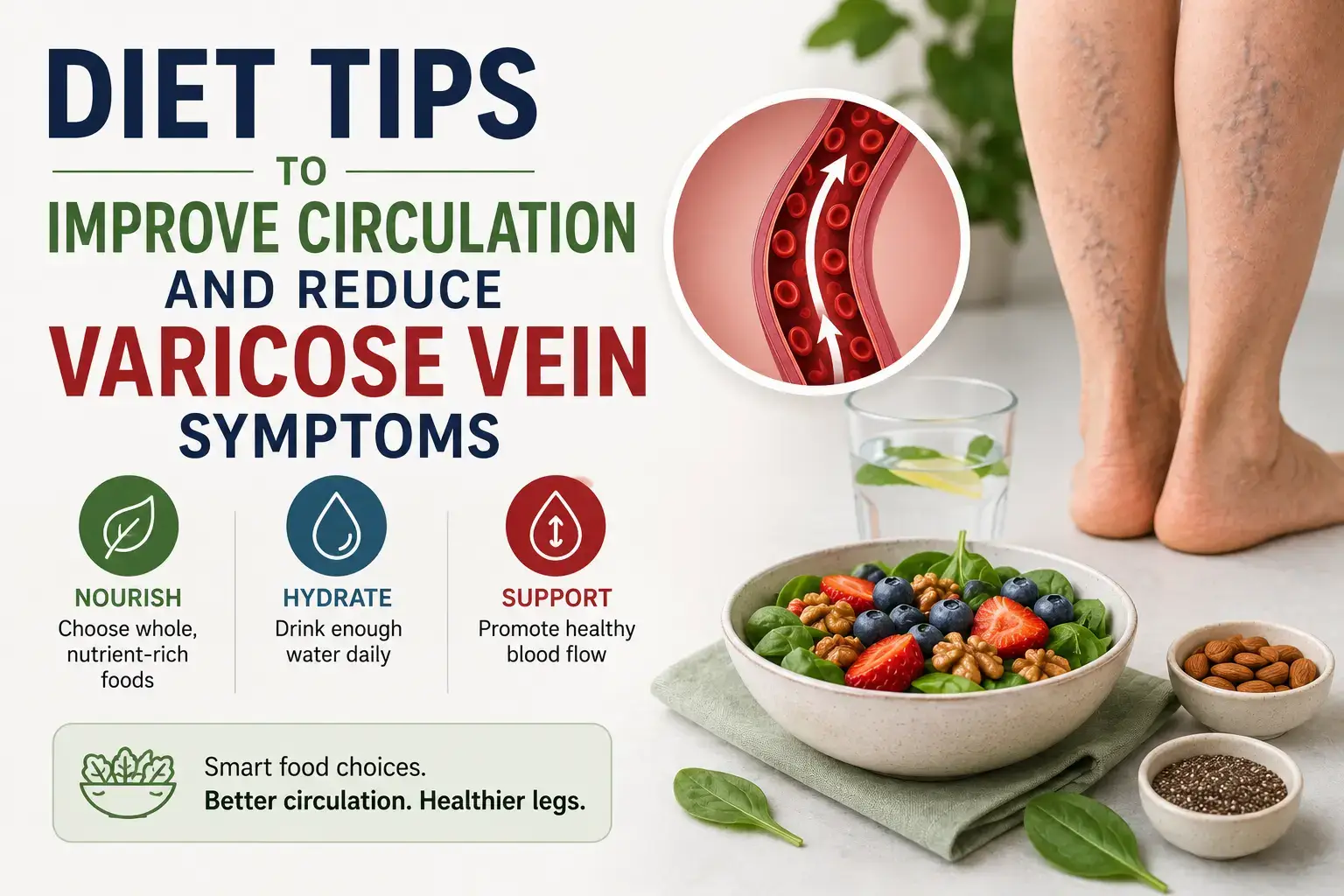
Diet Tips to Improve Circulation and Reduce Varicose Vein Symptoms
If you’ve ever noticed those bluish, twisted veins running along your legs, you’re not alone. Varicose veins affect millions of people and while they’re often seen as just a cosmetic concern, they can also cause real discomfort like aching, heaviness, swelling, and fatigue in the legs.
While treatments like sclerotherapy and laser therapy have come a long way, one of the most underrated tools in managing varicose vein symptoms is something you already do every day eating. The right foods can support healthy circulation, strengthen your vein walls, and reduce the inflammation that makes symptoms worse.
Here’s a simple, practical guide to eating well for better vein health.
Why Does Diet Matter for Varicose Veins?
Your veins have a tough job. They push blood back up to your heart against gravity, all day long. The tiny valves inside your veins are what make this possible but over time, these valves can weaken, causing blood to pool and veins to bulge.
Certain foods help by reducing inflammation, improving blood flow, and strengthening the walls of your blood vessels. Others think too much salt, sugar, and processed food can make things worse by increasing water retention and putting extra pressure on your veins.
The good news? Small, consistent changes to your diet can make a noticeable difference.
Foods That Help
1. Foods Rich in Flavonoids
Flavonoids are natural plant compounds that have a wonderful effect on circulation. They help relax blood vessels, reduce blood pressure, and improve blood flow all of which take pressure off those struggling veins.
Great sources include:
- Berries — blueberries, strawberries, cherries, and blackberries
- Citrus fruits — oranges, lemons, and grapefruit
- Dark chocolate (in moderation — the darker, the better!)
- Onions and garlic
- Spinach, kale, and other leafy greens
Try to include a handful of berries with your breakfast or swap your usual snack for an orange. These small additions really do add up.
2. High-Fibre Foods
Constipation might not seem related to varicose veins, but they’re more connected than you’d think. Straining during bowel movements puts pressure on the veins in your abdomen and legs, which worsens vein problems over time. A fibre-rich diet keeps things moving and reduces that unnecessary pressure.
Good fibre sources include:
- Whole grains like oats, brown rice, and whole wheat bread
- Lentils, chickpeas, and kidney beans
- Fruits like apples, pears, and bananas
- Vegetables like broccoli, carrots, and sweet potatoes
If you’re not used to eating a lot of fibre, increase it gradually and drink plenty of water alongside it.
3. Foods High in Vitamin C
Vitamin C is essential for producing collagen and elastin the proteins that keep your vein walls strong and flexible. Without enough of it, blood vessel walls can weaken over time.
Stock up on:
- Amla (Indian gooseberry) — one of the richest sources of Vitamin C
- Bell peppers (especially red and yellow ones)
- Guavas
- Kiwi, papaya, and mangoes
- Broccoli and tomatoes
A simple glass of amla juice in the morning or adding bell peppers to your sabzi are easy ways to get more Vitamin C into your day.
4. Foods Rich in Vitamin E
Vitamin E acts as a natural blood thinner and helps prevent clotting, which supports healthy circulation. It also protects cells from damage caused by inflammation.
Find it in:
- Almonds, walnuts, and sunflower seeds
- Avocado
- Spinach and broccoli
- Sunflower oil and olive oil
A small handful of almonds as an afternoon snack is one of the simplest things you can do for your vein health.
5. Rutin-Rich Foods
Rutin is a lesser-known but powerful compound that helps strengthen capillaries and reduce inflammation. It’s often used in supplements for vein health, but you can also get it from food.
Good sources include:
- Buckwheat (kuttu — especially popular during fasting seasons in India!)
- Asparagus
- Apples (with the skin on)
- Figs
- Green tea and black tea
6. Plenty of Water
This one isn’t a food, but it’s just as important. Staying well-hydrated keeps your blood at the right consistency not too thick so it flows easily through your veins. Dehydration, on the other hand, causes blood to thicken and makes circulation sluggish.
Aim for at least 8–10 glasses of water a day, and more if you’re active or it’s hot outside. Coconut water, buttermilk (chaas), and herbal teas also count toward your daily fluids.
Foods to Limit or Avoid
Just as important as what you eat is what you cut back on:
Salty foods: Excess salt causes water retention and swelling, which increases pressure in your leg veins. Watch out for pickles, papads, processed snacks, and packaged foods that are high in sodium.
Refined carbohydrates and sugar: White bread, maida-based snacks, sweets, and sugary drinks can promote inflammation and weight gain, both of which worsen varicose vein symptoms.
Alcohol: Alcohol causes blood vessels to dilate and can interfere with circulation. It also dehydrates you, which thickens the blood.
Fried and processed foods: These are high in unhealthy fats and sodium, contributing to inflammation and poor vascular health.
A Sample Day of Eating for Vein Health
To bring it all together, here’s what a typical day might look like:
Morning: A glass of warm water with lemon → Oats porridge with a handful of mixed berries and almonds → A small bowl of fresh fruit (papaya or guava works great)
Mid-morning: Green tea or coconut water
Lunch: Brown rice or roti with dal, a sabzi made with leafy greens, and a side salad with tomatoes and onions → Chaas
Evening snack: A handful of walnuts or sunflower seeds → An apple with the skin on
Dinner: Buckwheat (kuttu) rotis or multigrain roti with a light vegetable curry → Warm turmeric milk at bedtime (turmeric has excellent anti-inflammatory properties)
Diet alone won’t make varicose veins disappear but it can make a real difference in how you feel day to day. Combined with regular movement (even short walks help), keeping your legs elevated when resting, and wearing compression stockings if recommended by your doctor, good nutrition is a powerful part of managing your vein health.
Conclusion
At Surekha Varicose Veins, we believe that lasting vein health comes from treating the whole person not just the vein. Whether you’re looking for dietary advice, exploring treatment options, or just want to understand your condition better, our team is here to help you every step of the way.
Have questions about varicose veins or want to book a consultation? Get in touch with us today. Healthy veins, healthier you.
Consult Now
Consult Dr. Ashish Dhadas at Surekha Varicose Veins Clinic to receive expert evaluation and personalized treatment.
Surekha Varicose Veins Clinic
Address: 2nd Floor, Surekha Varicose Veins Clinic, Swara Emerald, Dr R.P. Rd, Tilak Nagar, Dombivli East, Thane, Dombivli, Maharashtra 421201
Phone: 094038 90477
Book your consultation today and take the first step toward pain-free, healthier legs.