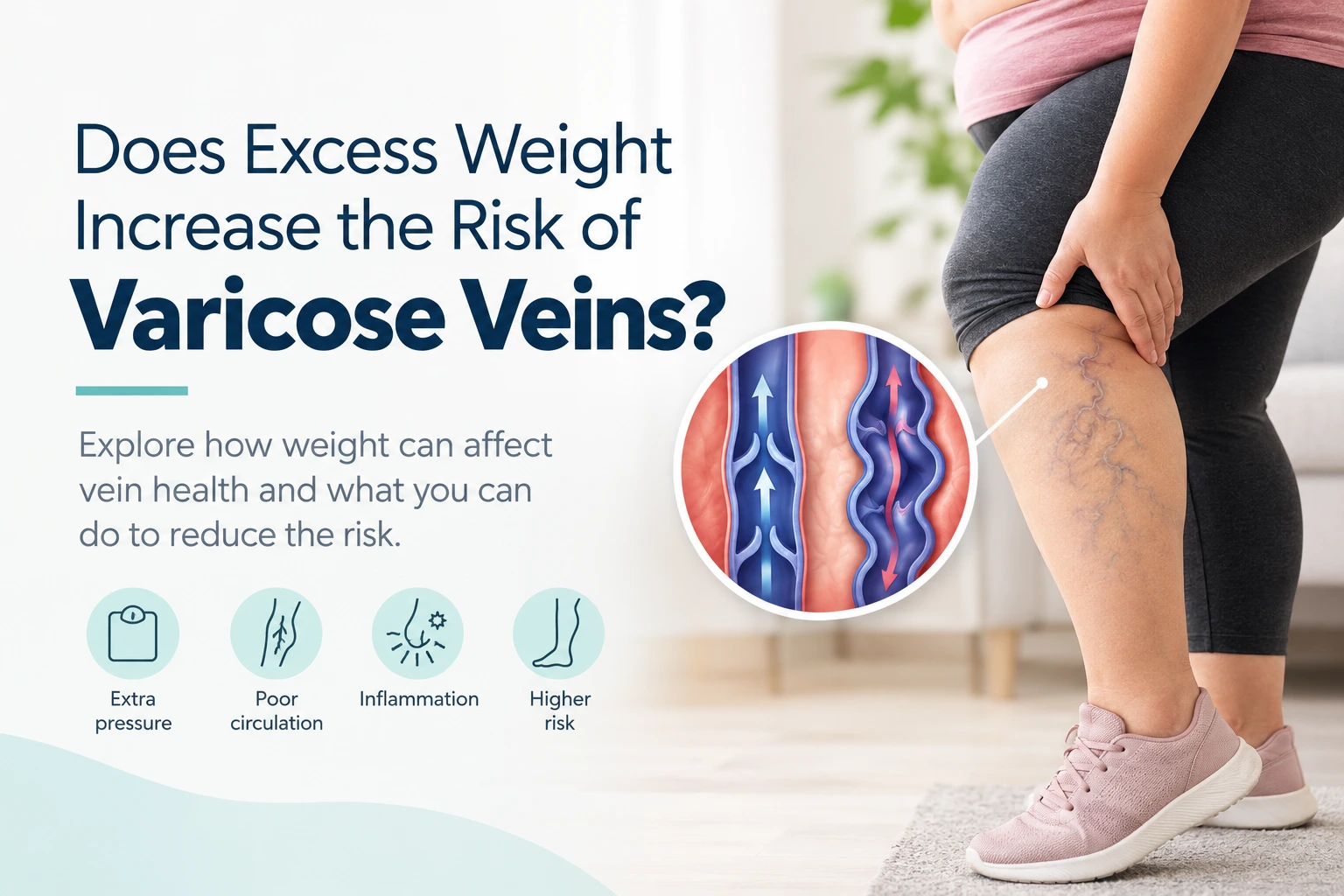
Does Excess Weight Increase the Risk of Varicose Veins?
Varicose veins are enlarged, twisted veins that commonly develop in the legs. They may cause aching, heaviness, itching and swelling around the ankles. While several factors contribute to their development, excess body weight is associated with an increased risk of varicose veins.
At Surekha Varicose Veins Clinic, Dr. Ashish Dhadas focuses on helping patients understand varicose vein symptoms, associated risk factors and available management options. This article explains how excess weight may affect vein health and what you can do to support healthy circulation.
How Does Excess Weight Affect Vein Health?
Veins in the legs carry blood back towards the heart against gravity. Small valves inside these veins help keep blood flowing in the correct direction.
When these valves become weak or damaged, blood can flow backwards and collect in the veins. This increases pressure within the veins, causing them to enlarge and become visible beneath the skin.
Excess body weight is associated with a higher risk of developing varicose veins. It may also contribute to leg discomfort and swelling. However, not everyone who carries excess weight develops varicose veins, and people at a healthy weight can also experience this condition.
Why Can Excess Weight Increase the Risk of Varicose Veins?
1. Increased Pressure on the Veins
Excess body weight can increase pressure within the abdominal and pelvic regions, potentially affecting blood flow from the legs towards the heart.
When venous pressure increases, existing weaknesses in the vein walls and valves may become more problematic. Over time, this can contribute to the development or worsening of varicose veins in susceptible individuals.
2. Reduced Physical Activity
Some people with excess weight may find prolonged walking or physical activity uncomfortable, particularly if they already experience joint pain or leg heaviness.
Reduced movement means the calf muscles are activated less frequently. These muscles help push blood upwards through the leg veins.
Regular movement, including walking and ankle exercises, can support circulation and may help manage symptoms.
3. Increased Leg Swelling and Discomfort
Excess weight may be associated with swelling and discomfort in the lower limbs. When varicose veins are also present, these symptoms may become more noticeable.
Persistent swelling should not automatically be attributed to body weight, as venous insufficiency, medication effects and other medical conditions can also contribute.
4. Greater Difficulty Managing Existing Symptoms
For people who already have varicose veins, excess weight may contribute to a greater symptom burden.
Aching, heaviness and swelling can make everyday activities less comfortable. Addressing relevant lifestyle factors may help improve general health and symptom management, although it cannot reverse established damage to vein valves.
What Are the Other Risk Factors for Varicose Veins?
Excess weight is only one of several factors associated with varicose veins.
Other risk factors include:
- Family history: Having close relatives with varicose veins may increase your likelihood of developing them.
- Age: Vein walls and valves may weaken with age.
- Pregnancy: Hormonal changes and increased blood volume can contribute to vein problems during pregnancy.
- Prolonged standing or sitting: Remaining in one position for extended periods may contribute to blood pooling in the legs.
- Previous blood clots or vein problems: Certain venous conditions can affect circulation and increase the risk of chronic venous insufficiency.
Having one or more risk factors does not mean that varicose veins will definitely develop.
Can Losing Weight Help With Varicose Veins?
If you carry excess weight, gradual weight management may help reduce some of the pressure associated with excess body weight and support overall health.
However, losing weight does not guarantee that existing varicose veins will disappear. Once vein valves become damaged, weight loss alone cannot reliably restore their normal function.
A balanced approach may include:
1. Regular Walking
Walking activates the calf muscles, helping move blood back towards the heart. Begin with a comfortable duration and increase activity gradually according to your ability.
2. A Balanced Diet
Include vegetables, fruits, whole grains, pulses and adequate protein in your meals. A balanced diet can support weight management and general health.
3. Avoiding Prolonged Inactivity
Take regular movement breaks if your work involves sitting for long periods. If you stand for extended periods, change positions and move your ankles and feet regularly.
4. Elevating Your Legs When Resting
Raising your legs comfortably while resting may help reduce swelling and the feeling of heaviness associated with venous problems.
5. Seeking Individualised Medical Advice
If varicose veins cause persistent pain, swelling, skin changes or other symptoms, consult a healthcare professional. Appropriate treatment depends on the clinical assessment, not body weight alone.
Can Varicose Veins Occur in People With a Healthy Weight?
Yes. Varicose veins can develop in people of all body sizes.
Genetics, ageing, pregnancy, prolonged standing and the condition of the vein valves can all influence risk. A person with a healthy weight may still develop varicose veins because of inherited or other contributing factors.
Therefore, maintaining a healthy weight should be viewed as one part of general health management rather than a guarantee against vein problems.
When Should You Consult a Vein Specialist?
Consider seeking medical advice if you notice:
- Enlarged, twisted veins in the legs.
- Persistent leg aching or heaviness.
- Swelling around the ankles.
- Itching or skin discolouration near the affected veins.
- Skin changes or a wound near the ankle that does not heal.
- Repeated bleeding from a varicose vein.
Seek urgent medical attention if a varicose vein bleeds, becomes hot and painful, or if you develop sudden swelling or pain in one leg. These symptoms may indicate a complication that needs prompt assessment.
A healthcare professional may examine your legs and recommend a duplex ultrasound scan when appropriate to assess blood flow and valve function.
Conclusion
Excess body weight may increase the risk of varicose veins and contribute to leg discomfort in some individuals. However, genetics, age, pregnancy and other factors can also influence vein health. Maintaining a healthy lifestyle and staying physically active may support circulation, but existing varicose veins may require medical evaluation and appropriate treatment.
If you are experiencing persistent leg pain, swelling, heaviness or visible varicose veins, consult a qualified healthcare professional for an assessment.
At Surekha Varicose Veins Clinic, Dr. Ashish Dhadas can help evaluate vein-related concerns and discuss suitable management options based on your symptoms and clinical findings.
Medical disclaimer: This article is intended for general educational purposes and does not replace individual medical consultation, diagnosis or treatment.
About the Clinic
Surekha Varicose Veins Clinic is a specialized center dedicated to diagnosing and treating varicose veins and venous disorders. Under the expert guidance of Dr. Ashish Dhadas, we provide cutting-edge treatments in a patient-friendly environment.
Consult Dr. Ashish Dhadas at Surekha Varicose Veins Clinic to receive expert evaluation and personalized treatment.
Surekha Varicose Veins Clinic
Phone: 094038 90477
Contact us for your consultation today!
FAQs
Excess body weight is associated with an increased risk of varicose veins, but it is not the only cause. Genetics, age, pregnancy and other factors also influence whether someone develops the condition.
Not necessarily. Weight management may support general health and symptom management, but it cannot reliably repair damaged vein valves or eliminate established varicose veins.
Walking activates the calf muscles and supports blood circulation. It may help relieve some symptoms, but the amount and intensity of exercise should be appropriate for the individual’s health and physical ability.
Yes. People who are not overweight can develop varicose veins, particularly if they have a family history, increasing age, a history of pregnancy or other risk factors.
Do not delay medical evaluation because of your weight. A healthcare professional can assess your symptoms and discuss appropriate management. Weight management may be recommended as part of an overall health plan when relevant