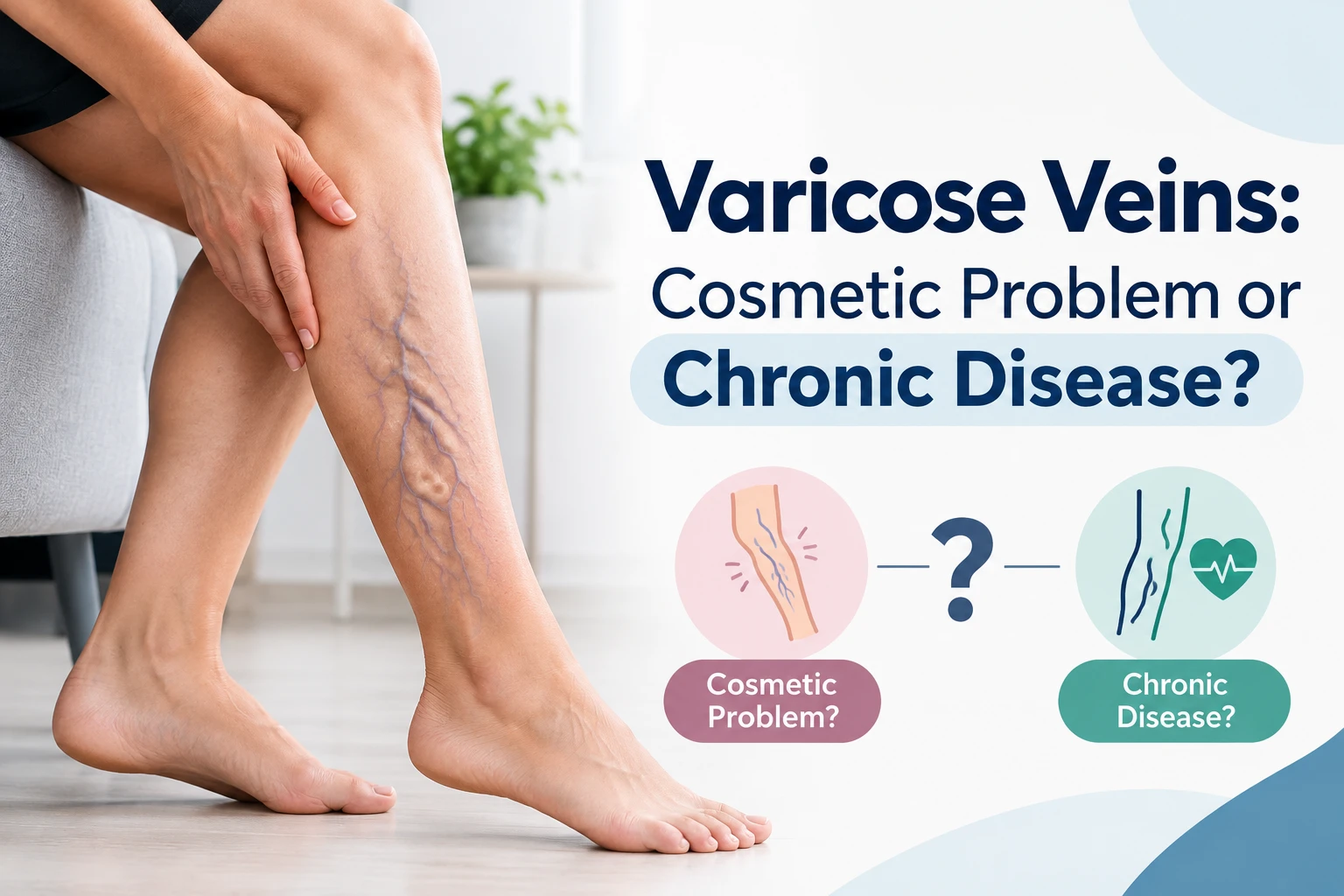
Varicose Veins: Cosmetic Problem or Chronic Disease?
For years, varicose veins have been dismissed as a “cosmetic issue” twisted, bulging, blue-purple veins that some people simply choose to hide under trousers or long skirts. But is that really all they are? According to Dr. Ashish Dhadas at Surekha Varicose Veins Clinic, this common misconception often delays diagnosis and allows a manageable condition to progress into a serious, chronic medical problem.
In this blog, we break down what varicose veins actually are, why they form, and — most importantly why they deserve far more attention than a passing glance in the mirror.
What Are Varicose Veins?
Varicose veins are enlarged, twisted veins that usually appear on the legs and feet. They develop when the valves inside the veins weaken or become damaged, causing blood to pool instead of flowing efficiently back to the heart. Over time, this pooling increases pressure inside the vein walls, causing them to stretch, bulge, and become visible beneath the skin.
While they are most commonly seen in the legs due to the pressure of standing and walking, varicose veins can technically develop anywhere blood flow is affected by faulty valves.
The Common Myth: "It's Just Cosmetic"
Many patients visit a clinic only after months sometimes years of ignoring the early signs, believing varicose veins are purely an appearance-related concern. This mindset is one of the biggest reasons the condition worsens.
In reality, varicose veins are frequently the visible sign of an underlying medical condition called Chronic Venous Insufficiency (CVI) a progressive disorder where veins struggle to send blood back to the heart efficiently.
Why Varicose Veins Are More Than Skin Deep
1. They Signal an Underlying Circulatory Problem
Bulging veins are often just the tip of the iceberg. Beneath the surface, blood is pooling, pressure is building, and the surrounding tissue may already be under strain.
2. They Can Progress if Left Untreated
Without treatment, varicose veins don’t stay the same — they tend to worsen over time. Increased pressure can lead to:
- Persistent leg pain, heaviness, and fatigue
- Swelling (edema) around the ankles and lower legs
- Skin discoloration and thickening
- Venous eczema or itching
- Venous ulcers — slow-healing, painful wounds near the ankles
- Superficial thrombophlebitis inflammation and clotting within the vein
- In rare but serious cases, a higher risk of deep vein thrombosis (DVT)
3. They Affect Quality of Life
Chronic discomfort, restricted mobility, disturbed sleep due to leg cramps, and self-consciousness about appearance can all take a toll making varicose veins as much a quality-of-life issue as a medical one.
Who Is at Risk?
Varicose veins don’t discriminate, but certain factors increase the likelihood of developing them:
- Prolonged standing or sitting (common in teachers, nurses, drivers, desk-job professionals)
- Family history of varicose veins or venous disease
- Pregnancy, due to increased blood volume and hormonal changes
- Obesity, which adds pressure on leg veins
- Age, as vein valves naturally weaken over time
- Gender — women are statistically more prone, partly due to hormonal factors
- Sedentary lifestyle with limited physical activity
Signs You Shouldn't Ignore
While visible, rope-like veins are the most obvious symptom, watch for these additional warning signs:
- Aching, throbbing, or heaviness in the legs, especially by evening
- Swelling around the ankles or lower legs
- Burning or itching sensation near the veins
- Muscle cramps, particularly at night
- Skin changes such as darkening or hardening near the ankles
- A non-healing sore or wound near the lower leg
If you notice any of these symptoms alongside visible veins, it’s time to consult a specialist rather than a cosmetician.
Diagnosis: How Doctors Confirm the Severity
At Surekha Varicose Veins Clinic, evaluation typically involves:
- A detailed physical examination of the legs while standing and lying down
- Doppler ultrasound (venous duplex scan) to assess blood flow and check for valve reflux or clot formation
- Assessment of skin changes, swelling, and vein mapping to plan the right treatment approach
This diagnostic step is crucial in determining whether the case is purely cosmetic or indicates chronic venous insufficiency requiring medical intervention.
Treatment Options: From Conservative Care to Advanced Procedures
Treatment is tailored to the severity of the condition. Dr. Ashish Dhadas emphasizes a step-by-step approach:
Conservative Management (Early Stage)
- Compression stockings to improve circulation and reduce swelling
- Lifestyle modifications — regular walking, leg elevation, weight management
- Avoiding prolonged standing or sitting without movement
Minimally Invasive Procedures (Moderate to Advanced Stage)
- Endovenous Laser Ablation (EVLA) — uses laser energy to seal off the damaged vein
- Radiofrequency Ablation (RFA) — closes the faulty vein using heat energy
- Sclerotherapy — a solution is injected into smaller veins to collapse them
- VenaSeal (Medical Adhesive Closure) — a newer, minimally invasive technique using medical glue to seal veins
These modern procedures are typically day-care treatments — meaning patients can go home the same day, with minimal downtime and a much faster recovery compared to traditional vein-stripping surgery.
Surgical Treatment (Severe Cases)
In select advanced cases, procedures like vein ligation and stripping may still be recommended, though these are far less common today given the effectiveness of minimally invasive alternatives.
Cosmetic Problem or Chronic Disease — What's the Verdict?
The honest answer: varicose veins can be both but they should never be treated as only cosmetic. Even when symptoms seem mild, the underlying valve dysfunction tends to progress with time. Early-stage varicose veins that are addressed cosmetically today can quietly evolve into chronic venous insufficiency, ulcers, or clotting complications tomorrow if the root cause isn’t treated.
Recognizing varicose veins as a medical condition with cosmetic implications — rather than the other way around is the key shift in mindset that leads to timely treatment and better long-term outcomes.
When Should You See a Doctor?
You should consult a vein specialist if you notice:
- Veins that are increasing in size or number
- Persistent leg pain, heaviness, or swelling
- Skin discoloration near the ankles
- Any sore or ulcer that isn’t healing
- A family history of venous disease combined with early symptoms
Early consultation allows for simpler, less invasive treatment and prevents complications down the line.
Why Choose Surekha Varicose Veins Clinic?
Under the expert guidance of Dr. Ashish Dhadhas, Surekha Varicose Veins Clinic focuses on accurate diagnosis, minimally invasive treatment, and personalized care for every stage of varicose vein disease. From the first consultation and Doppler ultrasound to advanced laser and radiofrequency procedures, the clinic is dedicated to helping patients move beyond “hiding” their veins toward genuinely treating them.
If you’ve been living with visible veins and wondering whether it’s “just cosmetic,” don’t wait for symptoms to worsen. A timely evaluation can make all the difference between a simple in-clinic procedure and a complicated, prolonged treatment later.
Schedule Your Consultation Today
Don’t let varicose veins go untreated. Schedule a consultation with Dr. Ashish Dhadas at Surekha Varicose Veins Clinic today for expert diagnosis and personalized treatment options.
About the Clinic
Surekha Varicose Veins Clinic is a specialized center dedicated to diagnosing and treating varicose veins and venous disorders. Under the expert guidance of Dr. Ashish Dhadas, we provide cutting-edge treatments in a patient-friendly environment.
Consult Dr. Ashish Dhadas at Surekha Varicose Veins Clinic to receive expert evaluation and personalized treatment.
Surekha Varicose Veins Clinic
Phone: 094038 90477
Contact us for your consultation today!
FAQs
In most cases, they’re not immediately dangerous, but if left untreated, they can lead to complications like ulcers, skin changes, or clotting — making early treatment important.
No. Varicose veins do not resolve on their own once the vein valves are damaged. However, lifestyle changes can slow progression, and medical treatments can effectively remove or close them.
Modern treatments like laser ablation, radiofrequency ablation, and sclerotherapy are minimally invasive, performed under local anesthesia, and involve minimal discomfort with quick recovery.
Most minimally invasive procedures allow patients to resume normal activities within 1–2 days, unlike traditional surgery, which requires longer recovery.
While the treated vein is permanently closed or removed, new varicose veins can develop in other areas over time, especially without lifestyle management making periodic follow-up important.
A vascular or vein specialist, like Dr. Ashish Dhadas at Surekha Varicose Veins Clinic, can accurately diagnose the severity and recommend the right treatment path.